
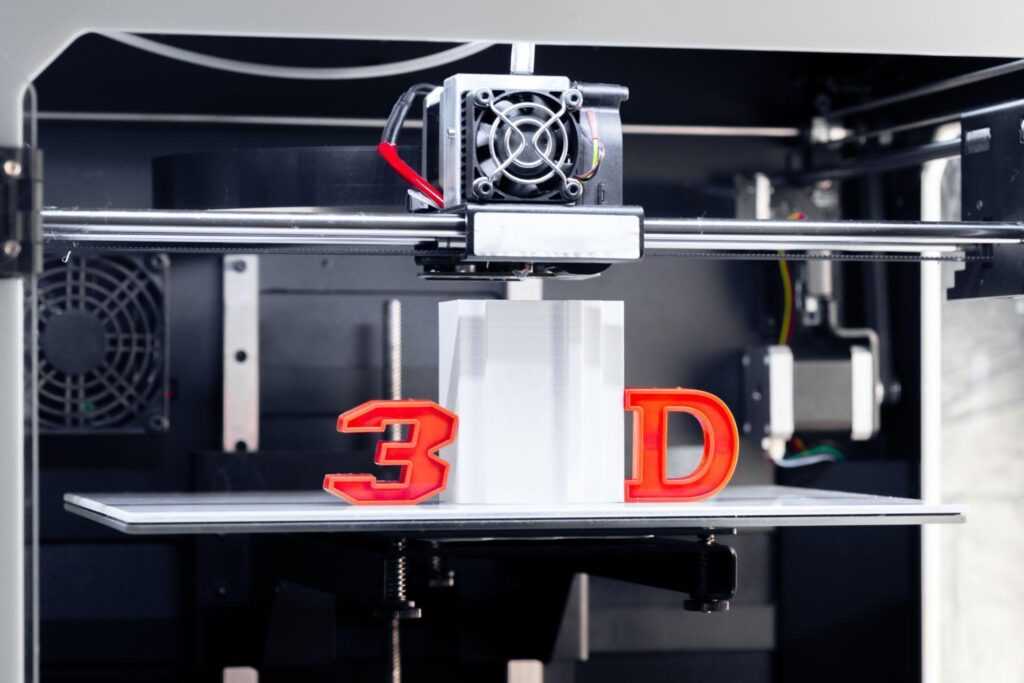
Imagine moving beyond selling the same t-shirts, mugs, and tote bags as everyone else. Instead, your store offers custom desk organizers designed for remote workers, personalized board game accessories, unique home décor pieces, or replacement parts that customers can’t find anywhere else. Better yet, each product is created only after an order is placed, eliminating the need to fill your garage or warehouse with inventory.
What if you could launch an ecommerce business selling products that didn’t exist until your customer imagined them? That’s exactly what 3D printing for print on demand is making possible. While traditional POD transformed how entrepreneurs sell custom apparel and accessories, 3D printing is opening an entirely new category of personalized manufacturing. In this article, we’ll explore why this model represents one of the most exciting opportunities for creators, the business advantages it offers, and why early adopters are already looking beyond apparel to build the next generation of ecommerce brands.
How 3D Printing Redefines the POD Model
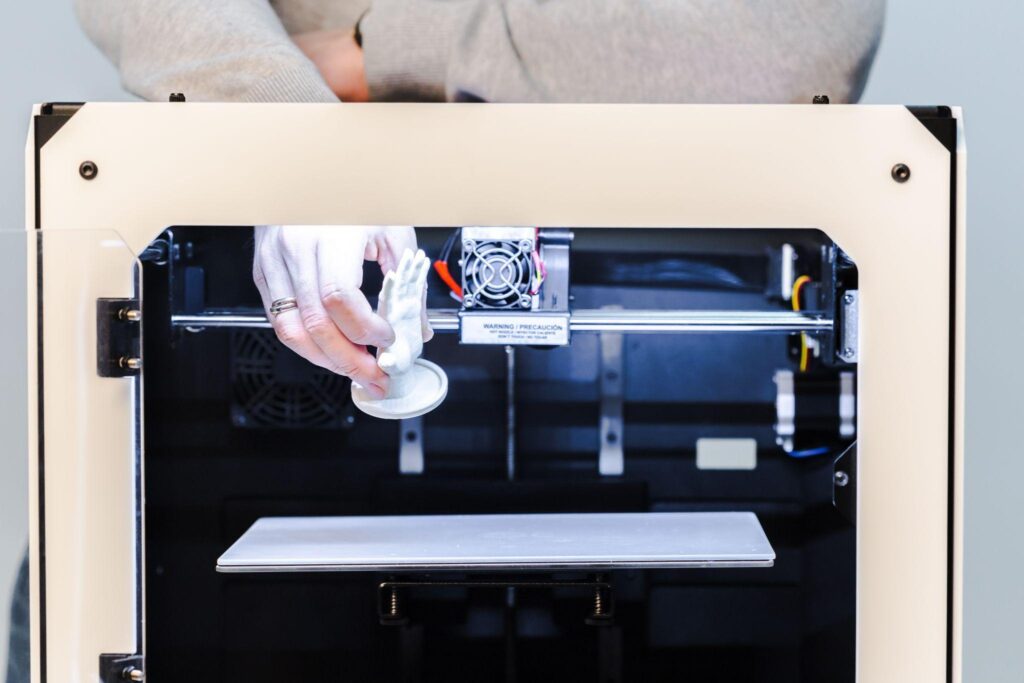
Traditional print-on-demand revolves around decorating an existing product. A blank t-shirt, mug, or phone case becomes unique through custom graphics or typography.
With 3D printing for print on demand, the concept goes one step further.
Instead of customizing the surface of a product, you’re creating the product itself from a digital design.
That shift fundamentally changes the business model.
A customer places an order through your Shopify store or an online marketplace such as Etsy. Instead of retrieving inventory from a warehouse, a 3D printing partner—or your own production setup—manufactures the object from a digital file before shipping it directly to the customer.
This form of on demand manufacturing with 3D printing dramatically expands what’s possible.
Instead of being limited to apparel or drinkware, entrepreneurs can explore products such as:
- Home organization accessories
- Gaming miniatures
- Personalized desk accessories
- Decorative lighting
- Kitchen tools
- Pet accessories
- Camera mounts
- Replacement components
- Educational models
For small businesses, this creates opportunities that simply don’t exist with traditional manufacturing. Rather than investing thousands of dollars in molds, tooling, or minimum production quantities, products can be introduced individually and refined based on customer demand.
The result is a more flexible 3D printing business model where creativity—not inventory—becomes the primary competitive advantage.
The New Frontier: Key Benefits for Your POD Business
The greatest opportunity isn’t the technology itself.
It’s what the technology enables.
For entrepreneurs already familiar with print-on-demand, 3D printing represents an evolution rather than a replacement. Many of the same business principles still apply, but the potential product catalog becomes dramatically larger.
While the technology is new, success still depends on understanding the foundational steps of a print on demand business, whether you’re selling custom desk organizers or launching a traditional apparel brand through platforms like Printify. The underlying business model, branding, customer experience, and product validation,remains remarkably similar.
Higher Margins Through Specialized Products
Traditional POD has become increasingly competitive.
Thousands of sellers often compete with nearly identical apparel designs, placing downward pressure on pricing.
Custom 3D-printed products, however, frequently solve specific problems or serve highly targeted communities.
For example:
Imagine creating a custom mechanical keyboard accessory.
- Material and production cost: $8
- Retail selling price: $34
- Gross profit before marketing and platform fees: $26
Because customers are purchasing functionality, personalization, or niche expertise—not simply artwork—they’re often willing to pay significantly higher prices than they would for standard printed merchandise.
This creates meaningful 3D printing opportunities for POD businesses looking to diversify beyond saturated product categories.
Unlocking True Product Customization
Traditional print-on-demand allows customers to personalize images, graphics, or text.
3D printing allows them to personalize the product itself.
Instead of simply adding a name to an object, customers can request:
- Different dimensions
- Additional compartments
- Alternative mounting options
- Personalized engravings
- Custom-fit components
- Product variations designed around specific use cases
This level of customization creates a significant competitive advantage because products become genuinely unique rather than visually customized.
For many entrepreneurs, this represents the biggest shift in how products are designed, marketed, and sold.
Zero Inventory Creates Room for Experimentation
One of the strongest arguments for pod business growth with 3d printing is the ability to test ideas without committing to inventory.
Rather than producing hundreds of units before launch, entrepreneurs can introduce dozens of digital product concepts and manufacture only those customers actually purchase.
That flexibility encourages innovation.
Instead of asking,
“Will this sell?”
Businesses can simply launch, observe customer demand, and improve products through rapid iteration.
This low-inventory model also makes seasonal products, limited-edition releases, and experimental designs much more practical than with traditional manufacturing.
Rapid Prototyping Accelerates Innovation
Traditional product development often involves multiple manufacturing rounds before reaching a finished product.
3D printing dramatically shortens that cycle.
Designs can be adjusted, tested, and improved much more quickly, allowing entrepreneurs to respond to customer feedback without waiting months for new production runs.
Whether refining ergonomic improvements, testing different product sizes, or introducing entirely new concepts, rapid product development becomes an everyday part of the business rather than an expensive exception.
For small ecommerce brands, that ability to learn and adapt quickly may become one of the most valuable competitive advantages available.
From Niche to Mainstream: Profitable 3D Product Categories
One of the biggest misconceptions about 3D printing is that it’s limited to prototypes or hobbyist projects. In reality, some of the most successful businesses are using on-demand manufacturing to serve highly specific customer needs—often in markets with far less competition than traditional print-on-demand.
Unlike apparel, where hundreds of stores may offer similar designs, 3D printing allows entrepreneurs to create products that solve real problems or cater to passionate niche communities.
Home Organization and Modern Living
Consumers continue investing in products that make their homes more functional and organized.
Custom cable organizers, headphone stands, plant accessories, drawer dividers, desk organizers, and decorative storage solutions all represent products that are inexpensive to manufacture yet offer significant perceived value.
Unlike mass-produced alternatives, these products can be customized for different room sizes, color schemes, or customer preferences, giving retailers a meaningful point of differentiation.
Hobby, Gaming, and Creator Communities
Some of the most profitable ecommerce niches are built around passionate communities.
Board gamers, tabletop RPG players, drone enthusiasts, photographers, makers, and PC builders often search for accessories that simply aren’t available in traditional retail stores.
Examples include:
- Dice towers and storage cases
- Controller and headset stands
- Camera mounting accessories
- Keyboard accessories
- Miniature display stands
- Cable management solutions
These customers are typically less price-sensitive because they’re purchasing products designed specifically for their interests rather than generic alternatives.
Personalized Gifts That Go Beyond Text
Traditional print-on-demand often personalizes products by adding names or graphics.
3D printing allows entrepreneurs to personalize the object itself.
Imagine offering:
- Custom cookie cutters based on family pets
- Personalized desk nameplates
- Custom plant pots
- Wedding keepsakes
- Pet tags designed around a customer’s artwork
- Personalized phone docks
Instead of simply decorating an existing product, you’re creating something that didn’t previously exist.
That creates a much stronger value proposition.
Functional Products for Everyday Use
Many entrepreneurs overlook practical items because they seem less exciting than artistic products.
In reality, utility often drives repeat purchases.
Replacement knobs, drawer handles, wall hooks, charging docks, kitchen organizers, monitor stands, and workspace accessories all solve everyday problems.
Customers are often willing to pay a premium for products that fit their exact needs rather than settling for one-size-fits-all alternatives.
The Future of Print-on-Demand Is Product Innovation
Traditional print-on-demand transformed ecommerce by making custom apparel accessible to almost anyone.
Platforms such as Printify and Printful helped entrepreneurs launch businesses without purchasing inventory, allowing creators to focus on branding, marketing, and customer experience rather than manufacturing.
That same philosophy is now beginning to influence 3D printing.
Instead of limiting entrepreneurs to customizable apparel or accessories, on-demand manufacturing is opening entirely new product categories where originality becomes the primary competitive advantage.
As production technologies continue improving, several trends are shaping the next generation of ecommerce:
Personalization Will Become the Standard
Consumers increasingly expect products tailored to their individual needs.
Rather than choosing between three preset options, they’ll expect products designed around their workspace, hobbies, home, or lifestyle.
3D printing makes this level of customization commercially viable without dramatically increasing production costs.
Faster Manufacturing Will Expand Opportunities
Every year, production speeds improve while manufacturing costs continue to decrease.
As these technologies mature, businesses will be able to introduce larger product catalogs, shorter production times, and more competitive pricing.
This makes 3D printing increasingly attractive for entrepreneurs looking to expand beyond traditional ecommerce categories.
AI and 3D Printing Will Work Together
Artificial intelligence is already helping entrepreneurs generate product concepts, improve designs, and automate creative workflows.
Combined with 3D printing, AI has the potential to accelerate product development even further by helping creators explore new ideas, refine prototypes, and quickly respond to changing customer demand.
The combination of AI-assisted design and on-demand manufacturing could become one of the defining trends of the next generation of ecommerce.
Early Movers Often Build the Strongest Brands
When traditional print-on-demand first emerged, early adopters built successful businesses by entering the market before competition intensified.
A similar opportunity exists today.
Many product categories remain underserved, giving entrepreneurs the chance to establish authority, develop recognizable brands, and build loyal customer communities before 3D printing becomes a mainstream ecommerce strategy.
Businesses that begin experimenting now may gain valuable experience and market insights that become difficult for later competitors to replicate.
Conclusion
3D printing for print on demand represents more than another manufacturing technique—it signals a broader shift toward personalized, inventory-free commerce.
While traditional POD transformed how entrepreneurs sell apparel, mugs, and accessories, 3D printing expands those same principles into entirely new product categories where customization goes far beyond adding a logo or graphic. From functional home products to hobby accessories and personalized gifts, the opportunities for innovation continue to grow.
The fundamentals of a successful ecommerce business remain the same: understand your audience, solve meaningful problems, and build products customers genuinely value. Platforms like Printify and Printful have already shown how powerful the inventory-free model can be, and 3D printing represents its next evolution.
For entrepreneurs willing to think beyond conventional product catalogs, this isn’t simply another ecommerce trend. It’s an opportunity to build brands around originality, customization, and innovation—qualities that are becoming increasingly valuable in the future of online retail.