
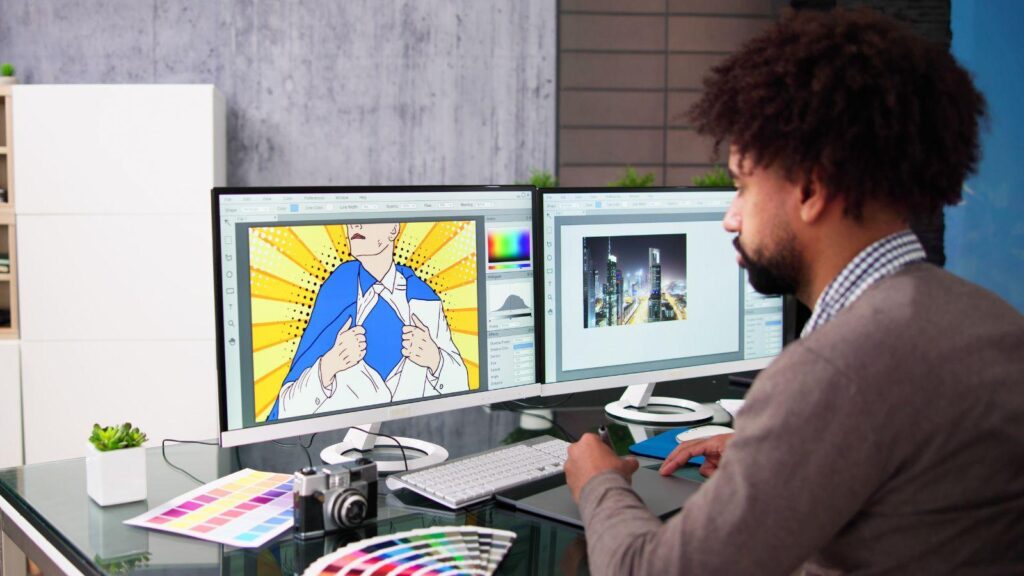
If you can make things look good, a clean thumbnail, a sharp logo, a layout that just works, you’re sitting on a skill a lot of people will happily pay for. And here’s the encouraging bit: the barrier to actually getting paid for it has never been lower. You don’t need an agency, a fancy degree, or a huge following. You need a skill you probably already have and a bit of a plan.
The design world is bigger and hungrier than most people realise, and there have genuinely never been more ways to earn money online with a pair of good design eyes. Let’s walk through the real ones.
The demand is real, and growing
Visual content is everywhere now, which means someone has to make it. Businesses need branding, creators need thumbnails and overlays, shops need product graphics, everyone needs social media assets. It adds up to a serious market, and some corners of it are booming. Grand View Research values the print-on-demand market alone in the tens of billions and growing at over 20% a year, and that’s just one slice of where design skills turn into money.
So this isn’t a case of squeezing into a shrinking pie. Demand for good visuals keeps climbing, and the tools to sell your work keep getting easier.
The routes worth knowing
Roughly in order of how hands-on they are, here’s where designers actually make money.
Freelancing is the classic, and still the highest earner per hour for most people. You take on client work, logos, brand kits, edits, layouts, and get paid directly for it. It’s mainstream, too. Upwork’s freelancing stats show tens of millions of people earning this way, and design is one of the most in-demand categories on every platform. The trade-off is that it’s client-facing, so you deal with briefs, revisions, and the occasional difficult customer.
Selling digital products is the one people sleep on. Make something once, sell it endlessly. Templates, presets, fonts, thumbnail packs, UI kits, editable PSDs, Canva templates. You put in the work up front, list it on a marketplace or your own store, and it can keep paying you long after. For anyone who likes making assets more than dealing with clients, this is the sweet spot.
Print-on-demand lets your designs live on physical products, tees, mugs, posters, without you touching inventory. You upload the artwork, the platform prints and ships when someone orders, and you take a cut. Given how fast that market is growing, a strong niche and a distinctive style can do real numbers.
Then there’s stock and asset marketplaces, where you sell graphics, icons, or illustrations to buyers who need them, and teaching. If you know your way around the software, tutorials, courses, and even paid tips content turn your process itself into income. That last one fits a GFX crowd especially well, since half of learning design is watching someone better do it.
You don’t have to be a pro to start
Here’s the reassuring part for anyone still leveling up. You don’t need to be elite to earn. You need to be good enough for a specific job and easy to work with.
Niche down instead of trying to do everything. “Thumbnails for gaming channels” or “logos for local cafes” gets you noticed far faster than “graphic designer.” Build a small, tight portfolio of your best work, not everything you’ve ever made. And treat consistency as the real skill: the person who ships steadily beats the more talented one who posts twice and vanishes. Small, regular wins compound into a reputation.
Keep your guard up
One honest warning, because creatives get targeted by a specific breed of scam. Watch out for fake clients who “accidentally” overpay and ask for a refund of the difference, or who want a full custom design as an unpaid “test” before hiring you. Both are old tricks that still catch people.
The wider rule holds here too: be very wary of anything where money flows out of your account instead of in. The Federal Trade Commission tracks a steady rise in online work scams built around exactly that pattern, an offer that looks great until you’re asked to pay or send money to unlock it. Get paid up front or through platform escrow, never do extensive free “tests,” and trust your gut when a client feels off.
The takeaway
Your ability to make things look good is a genuine, sellable asset, and the internet has never offered more ways to turn it into money. Freelance it, package it into products, slap it on merch, or teach it. Pick the route that suits how you like to work, start smaller than feels impressive, and keep showing up. The skill’s already yours. The rest is just deciding to get paid for it.